We Must Understand the Reality
Because you can’t solve what you haven’t dived into
The African creative economy is not underperforming because people lack talent. The work exists. The ideas exist. The audience exists. The problem is structural. There are systems that determine who creates value and who keeps it. And right now, those systems are not built in a way that allows the people doing the creating to benefit proportionately. Value is being produced here, but it is often captured elsewhere—by those who understand the paperwork, the structure, the contracts, the systems. So this is not about potential. It is about the gap between potential and what is actually being realised—and who gets to benefit from that gap.
A Sector that Produces- But Does Not Retain
High output. Low Ownership.
The creative economy generates enormous cultural and economic value. But the people creating that value rarely keep it. Not because they are not working hard enough. Not because the market is not there. But because the systems that turn creative work into owned, compounding assets are either missing or underdeveloped.There is no strong bridge between the individual creating and the market consuming. And without that bridge, value leaks—consistently, quietly, and over time.
The Missing Middle
Where value is supposed to be structured and captured
In some creative economies, there is a layer that sits between the artist and the market. Lawyers, managers, agents, publishers, accountants, investors—people and institutions whose role is to structure, protect, and grow value. That layer is what turns creativity into industry. Here, that layer is thin. Sometimes absent. Sometimes present, but disconnected from the realities of the people it is meant to serve.So what happens? Deals are made without structure. Rights are given away without valuation. Money moves without being tracked. Growth stops at the limits of individual effort. Nothing is being built that can outlive the person at the center of it. And that absence is where most of the loss happens.
Where Things Break Down
Not one failure but several, reinforcing each other
The problem isn’t caused by a single gap. It is a set of failures happening at the same time.Legally, many creatives do not fully know what they own—despite the fact that the law already protects their work from the moment it is created. Contracts are often verbal, unclear, or misunderstood. And over time, that leads to rights being lost, sometimes permanently.Financially, the system does not recognise creative work as something bankable. Income is irregular, assets are intangible, and so most creative businesses are locked out of credit, investment, and financial growth.Culturally, creative work is still too often treated as something secondary—as something you do on the side, not something that deserves serious structure, pricing, or investment. And that perception quietly enables exploitation. Institutionally, the systems that should support the sector are not built around how creative businesses actually operate. So even when opportunities exist, many cannot access them—not because they are unqualified, but because they are unstructured. Each of these reinforces the others. And together, they create a cycle where value is constantly produced—but rarely retained.
What This Looks Like in Real Life
Actual everyday stories.
This isn’t abstract. It looks like a musician who signs a deal and only later realises they no longer own their music. A designer who builds a brand, only to watch it be copied with no protection. A filmmaker whose work travels globally—but the income doesn’t follow them. A creator locked into a contract they didn’t fully understand. A business that could access funding—but cannot meet the structural requirements to apply. And over time, they add up—to an entire sector that keeps starting over, because what was built before was never fully held onto.
And Yet the Opportunity is Just as Real
Because where there is a gap, there is always leverage.
The same conditions that create the problem also create the opportunity. There is already strong creative output. There is already global demand. What is missing is the infrastructure to connect the two in a way that allows value to be captured and compounded. That gap—between what exists and what could exist—is where the opportunity sits.
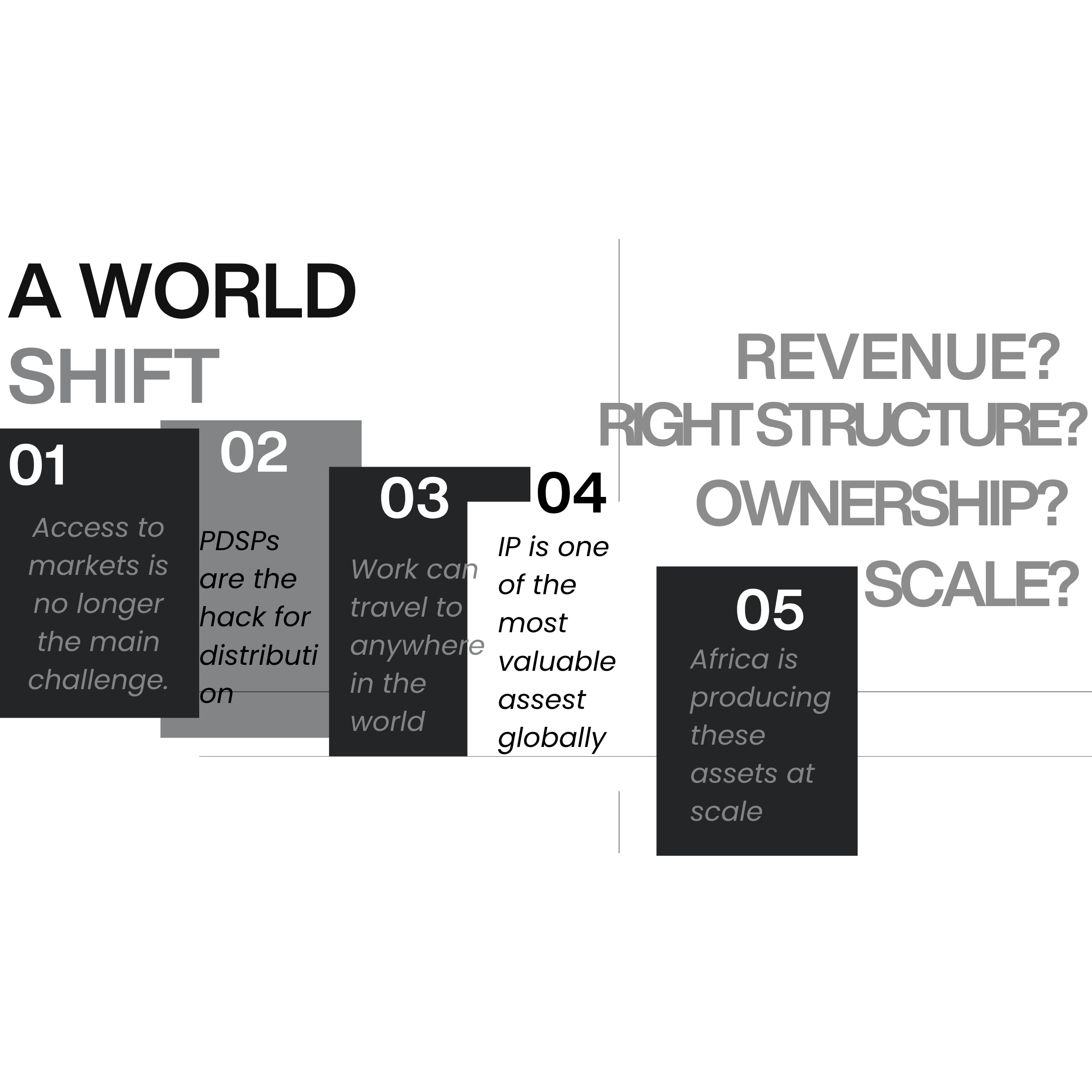
The World Has Already Shifted
The barriers are no longer where they used to be
The access to markets is no longer the main challenge. Digital platforms have removed the need for gatekeepers in distribution. A creator in Kampala can reach the same platforms as someone anywhere else in the world. The work can travel. But distribution alone is not enough. Without the right structures—ownership, contracts, systems—the revenue that comes with that access is not fully captured. At the same time, intellectual property has become one of the most valuable forms of economic asset globally. Brands, catalogues, content—these are what drive value in the modern economy. And Africa is producing this kind of value at scale. The question is not whether the value exists. The question is who holds it.
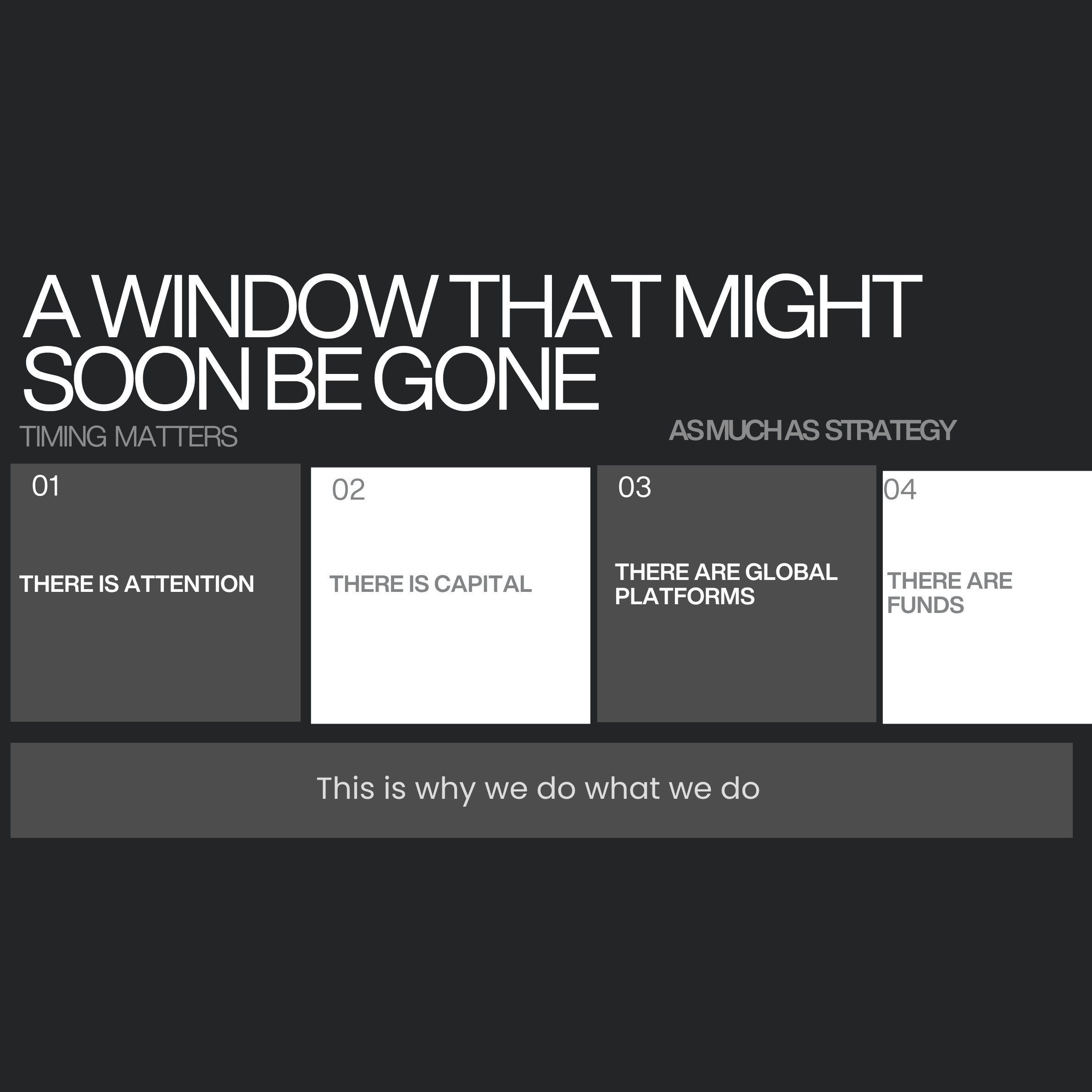
A Window That Might Soon Morph
Because timing matters as much strategy
In the right now, there is attention. There is capital. There are global platforms, funds, and institutions actively looking toward African creative markets. But access to that opportunity is not automatic. The people and businesses that benefit will be the ones that are prepared—structured, documented, clear on what they own, and able to engage on equal footing. Because without that, the same pattern repeats: opportunity comes, value is created, and ownership moves elsewhere.
Where the Real Value Sits
Practical, specific, accessible and already here
There is money already on the table—just not being fully accessed. Royalties that are not being collected because rights are not registered. Funding that is not being accessed because businesses are not structured. Deals that are signed below value because preparation is missing. Assets that exist but have never been recognised as such. Businesses that could scale—but are held back by lack of structure. This is not a future opportunity. It is a present one
What We Are Really Building Toward
From creativity to ownership. From ownership to leverage.
The creative economy generates enormous cultural and economic value. But the people creating that value rarely keep it. Not because they are not working hard enough. Not because the market is not there. .At its core, this is about shifting position. frim creating value to keeping it. From participating in the market to negotiating within
Why now?
Because if we don’t build it, who will?
The infrastructure gap must not remain open forever.It will be filled—either by those within the ecosystem, who understand its realities and are invested in its growth, or by those outside it, who are primarily interested in extracting value from it.So the question is not whether this will happen.It is who it will serve when it does.And that is why we are building now.

